
I've Taught Guitar for Decades — Here's What I Tell Every Beginner Before They Buy Their First Acoustic Guitar
Every week, someone asks me the same question. “Kelly, what’s the best acoustic guitar for beginners?”
I love this question not because the answer is simple, but because the answer reveals everything about whether someone is ready to truly learn guitar or whether they’re about to fall into the same traps that stop most beginners before they ever play a full song.
I’ve been playing guitar since I was fifteen years old. I’ve toured for decades, recorded sixteen albums, and taught hundreds of students from complete beginners who had never touched a string, to seasoned players who wanted to level up. I’ve watched people walk into their guitar journey with expensive instruments they couldn’t play and cheap ones that held them back. And I’ve watched students thrive with a simple, thoughtful choice made before they ever played a note.
So before you click “add to cart” on anything, read this first.
Should You Start on Acoustic or Electric? Here's My Take
Before we talk about which acoustic guitar to buy, let’s address the question underneath the question because I get this one constantly too.
The electric and acoustic guitar are as different as they are the same. Yes, there’s the obvious six strings, similar shapes but they feel different, and that matters more than most people realize.
It takes more hand strength to play an acoustic. If you already own both, my recommendation is simple: play whichever one feels best in your hands. Finding a guitar you genuinely love is the single most important thing you need to feel happy and inspired every time you pick it up.
The Acoustic Guitar and the Songwriter’s World
Most singer-songwriters gravitate toward acoustic guitar, and for good reason. The acoustic naturally invites experimentation, open tunings, a capo, fingerpicking patterns, and the full resonance of an unplugged instrument. You can explore those things on an electric, but the acoustic makes them feel more natural and more rewarding.
Acoustic guitars typically use heavier strings and handle a wider variety of tunings beautifully. The neck accommodates the different string tension created by lower and open tunings, which makes it ideal for the kind of wide-open strumming and tuning exploration that defines a lot of folk, blues, and Americana playing.
Approach an electric guitar the same way, and you’ll often run into a wall of low end a muddy tone that’s hard to dial out. The electric has lighter strings, a thinner natural sound, and is often running through overdrive. The acoustic gives you a fuller body, a richer tone, and a bigger natural resonance.
Why Electric Players Should Spend Time on Acoustic
If you’re primarily an electric player, practicing on an acoustic is one of the best things you can do for your playing. It builds hand strength, sharpens your rhythm guitar skills, and forces you to rely on your touch rather than your tone controls.
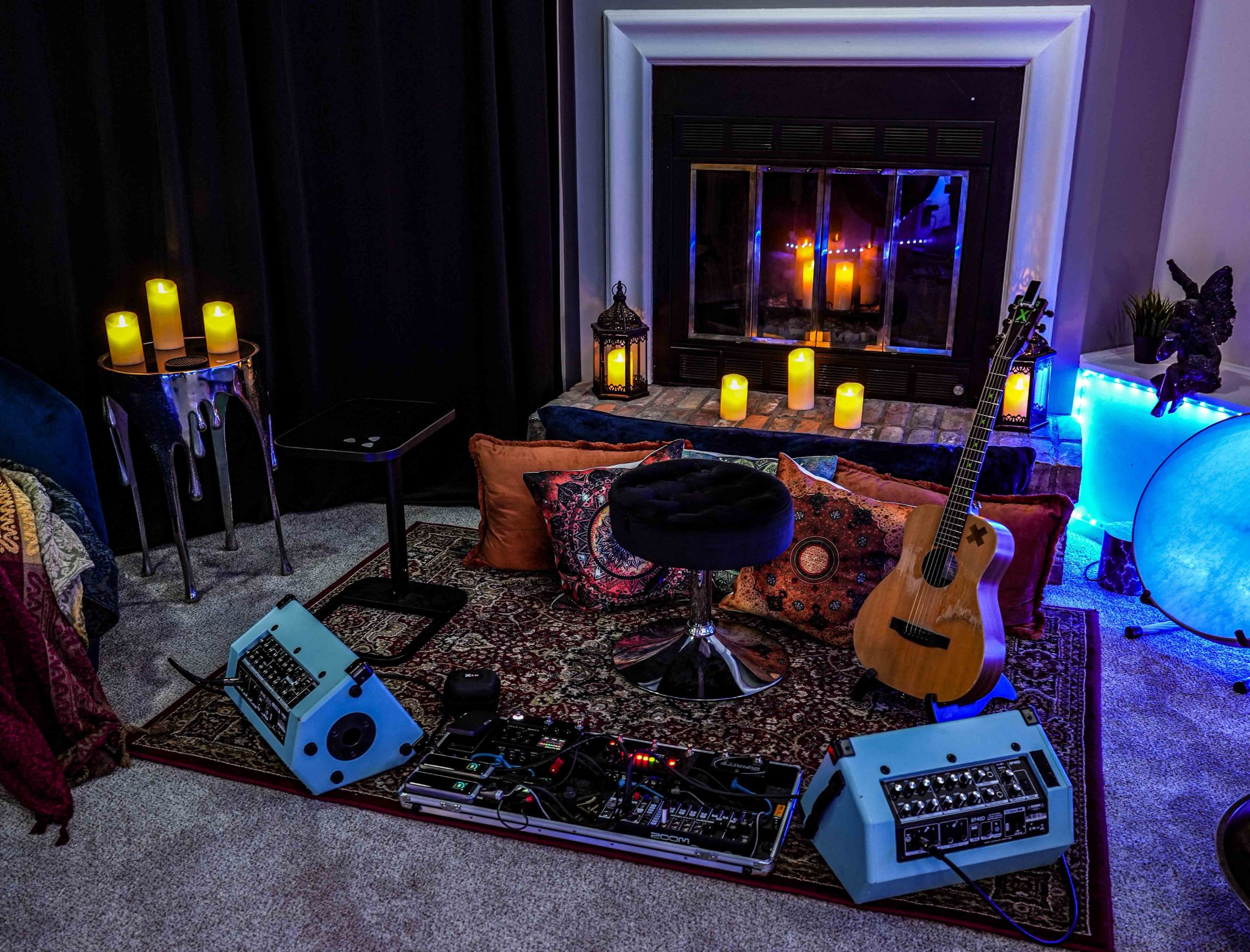
That said, I run my acoustic through a pedalboard and play it much like an electric. At the end of the day, we all develop our own style. Play long enough, and you find your signature sound.
Today, the majority of my gigs and soundscapes are written and performed on acoustic guitar and I love every minute of it.


Why Most "Best Beginner Guitar" Lists Get It Wrong
If you’ve already started searching for a beginner acoustic guitar, you’ve probably found dozens of roundups “Top 10 Best Acoustic Guitars Under $200” stuffed with affiliate links and generic recommendations.
Here’s the problem: those lists are written by people who want to sell you a guitar. I want to help you actually play one.
The best acoustic guitar for beginners isn’t a single model. It’s the right guitar for you, your hand size, your musical goals, your budget, and your learning environment. Let me walk you through exactly how to find it.
The First Thing Every Beginner Gets Wrong
Most beginners focus almost entirely on price. They either overspend, thinking a more expensive guitar will make learning easier, or they overspend, buying a $60 instrument that fights them at every turn.
Here’s the truth: playability matters more than price.
A guitar that is difficult to play physically with high action (the distance between the strings and the fretboard), sharp fret edges, or a neck that doesn’t fit your hand will make you think you’re a bad guitarist. You’re not. You just have a bad guitar.
I’ve seen talented students quit because they were practicing on an instrument that made pressing down a chord feel like a workout. I’ve also seen complete beginners fall in love with guitar because they happened to pick up an instrument that felt natural in their hands.
Lesson: Before anything else, a beginner guitar must be easy to play.
What to Look for in Your First Acoustic Guitar
1. Action: The Single Most Important Factor
Action refers to how high the strings sit above the fretboard. High action means harder pressing, sore fingers, and slower progress. Low, well-set-up action means cleaner notes, faster chord transitions, and far less frustration.
Many budget guitars ship from the factory with high action. The fix is simple a basic setup from a local luthier or guitar shop typically costs $40–$60 and can transform a mediocre guitar into a joy to play.
Tip: When buying in-store, press down on the strings at the 1st and 12th fret. If it requires significant force, ask if the action can be adjusted. When buying online, look for brands known for good factory setups.
2. Body Size: Fit Your Guitar to Your Body
Acoustic guitars come in several body sizes dreadnought, concert, auditorium, parlor, and travel size. The most common beginner recommendation is the dreadnought because of its full, rich tone. But it’s not always the right fit.
- Smaller players, younger students, or those with shorter arms often do better with a concert or 000 (auditorium) body. These guitars are easier to hold and reach around comfortably.
- Larger players typically feel right at home with a dreadnought or jumbo body.
- Travel guitars are great for consistent practice while on the go and as you’ll see below, my personal recommendation happens to be one.
Tip: If possible, hold the guitar in playing position before purchasing. It should feel natural to wrap your strumming arm over the body without straining.
3. Neck Profile: Your Hand Will Tell You
Guitar necks come in different profiles C-shape, D-shape, V-shape and different widths at the nut (the small piece at the top of the neck where strings rest before the tuning pegs). Most beginners prefer a standard C-shape with a nut width around 1-11/16 inches. It’s comfortable for most adult hands.
If your hands are on the smaller side, a slightly slimmer nut width can make chord fingering easier. If you have larger hands, a wider nut may feel more natural.
Tip: Play a few notes and a basic open chord if you can. Does your hand feel cramped? Does it feel loose and comfortable? Trust that feeling.
4. Tonewoods: Don’t Overthink It (Yet)
Here’s something I tell every beginner: at this stage, tonewoods matter far less than you think.
Yes, a spruce top sounds different from a mahogany top. Yes, rosewood fretboards have a different feel and resonance than maple. But as a beginner, the difference in your playing will far outpace the difference in tonewoods. Focus on playability and build quality first.
Tip: Solid tops vs. laminate tops. A guitar with a solid spruce or cedar top will resonate and age better than a fully laminate instrument. You can find solid-top acoustics starting around $200–$300 from reputable brands.
5. Tuning Stability: The Unsung Hero
A guitar that won’t stay in tune is demoralizing for a beginner. You’ll think you’re playing chords wrong when really your guitar is just out of tune.
Look for guitars with quality tuning machines sealed tuners tend to hold better than open-gear tuners on budget instruments. Brands like Yamaha, Fender, and Taylor Academy consistently receive praise for tuning stability at entry-level price points.
Tip: Tune the guitar, play for five minutes, then check the tuning again. Minor drift is normal; wild detuning is not.
What Budget Should You Set?
Here’s my honest breakdown by price range:
Under $150: Proceed with caution. Most guitars in this range are fully laminate with variable quality control. If this is your only option, prioritize buying from a music store where staff can check the setup, rather than ordering online blind.
$150–$300: This is the sweet spot for most serious beginners. Brands like Yamaha (FG800), Fender (CD-60S), and Seagull offer solid-top acoustics with good factory setups in this range. You can learn for years on these instruments.
$300–$600: If you’re committed and want room to grow, this range opens up better tonewoods, improved hardware, and more refined playability. Taylor Academy and Yamaha’s LL series live here.
One important note: Budget $40–$60 for a professional setup regardless of what you spend on the guitar. It’s the best investment you can make.

My Honest Top Picks for Beginners
These aren’t sponsored recommendations. These are guitars I’ve seen students learn on successfully and one I play myself.
- Yamaha FG800 — Consistently excellent factory setup, solid spruce top, dreadnought body. One of the best values in beginner guitars, period.
- Fender CD-60S — All-solid construction at a remarkable price point, comfortable neck, warm tone.
- Seagull S6 Original — Canadian-made, solid cedar top, slightly wider nut width that many players love. Excellent long-term instrument.
- Taylor Academy 10 — Higher price point ($300+), but Taylor’s attention to playability shows even at entry level. Great for smaller-handed players.
- Orangewood guitars — A newer brand worth attention. Direct-to-consumer pricing means more guitar for your dollar. Solid construction, good setups.

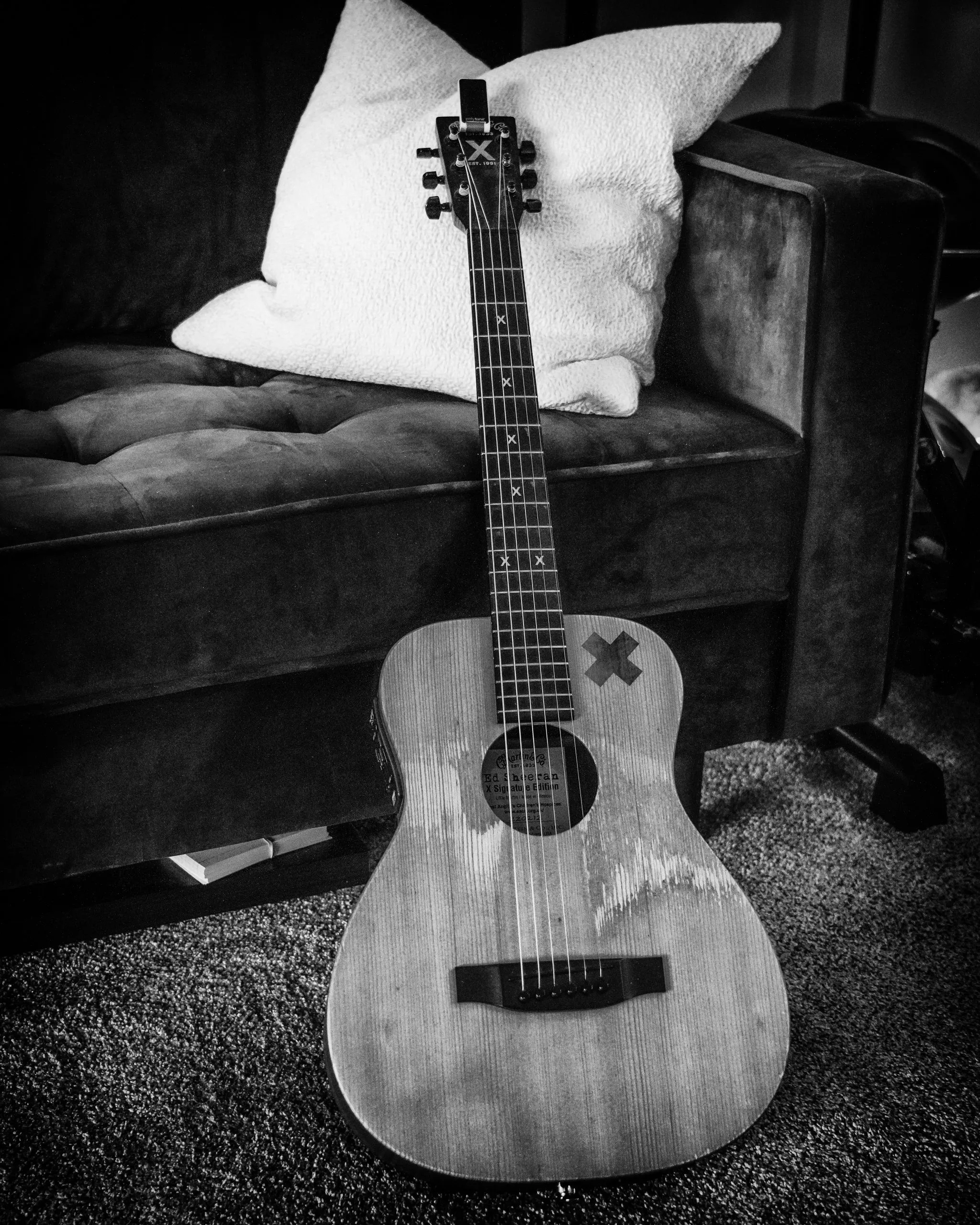
🎸 Kelly's Official Pick: The Martin LXK2 Little Martin
After decades of teaching, I’ve developed one personal recommendation I return to again and again especially for students who struggle with the size and weight of a full-size acoustic.
My go-to acoustic guitar is the Ed Sheeran Signature Acoustic Series and if you’re looking for the closest thing to it today, that’s the Martin LXK2 Little Martin.
I purchased the Ed Sheeran Signature model in 2016 and fell in love immediately. I was originally just looking for a quality travel-size guitar, and as a longtime Ed Sheeran fan, his innovative approach to live performance had always inspired me. What I didn’t expect was how much this guitar would change the way I teach.
After watching countless students struggle with the body of a full-size acoustic, I discovered that this travel guitar is often the answer. The body is similar to a parlor guitar, and the neck is a narrow neck which makes it significantly easier to play, especially for beginners, smaller hands, or anyone who finds a standard guitar body uncomfortable.
The Ed Sheeran model is no longer in production, but the Little Martin picks up right where it left off.
These guitars come in two versions — with or without a pickup — and I always recommend students go the extra mile and get the one with a pickup. You never know when you’ll want to plug in and turn up!
Here are the two models I recommend:
- 🔗 Martin LXK2 Little Martin – Natural (no pickup)
- 🔗 Martin LX1E Little Martin Acoustic-Electric – Natural (with Fishman pickup)
One last tip — if you’re shopping at Sweetwater, ask for Brian Ames. He’s a fantastic sales rep and will take great care of you!
The Question Nobody Asks (But Should)
After all of this advice, here’s the question that actually matters most:
Will you play it?
The best beginner acoustic guitar in the world is worthless if it’s sitting in a corner. The guitar you’ll actually pick up every day even if it’s a $180 Yamaha is worth infinitely more than the one gathering dust.
So buy something that excites you. A color or finish you love. A body style that feels natural. A sound that makes you want to strum.
That excitement is where real learning begins.
How I Got Here: A Story About a Principal, a Music Store, and Never Looking Back
I used to bring my electric guitar and my amp to school. Eventually, my principal threatened to call my dad and kick me out if I showed up with that amp one more time.
So I marched over to Fred Moore Music in Lexington, Kentucky, and bought my first acoustic guitar on credit. I told Freddie, the owner, that the school had basically forced my hand and honestly, I’ve never looked back.
Maybe that’s why I still play acoustic guitar like I play electric. It’s just who I am.
That first acoustic guitar didn’t feel like a compromise. It felt like a door opening onto something I didn’t know I needed. The guitar you choose as a beginner might do the same for you.
The guitar you buy won’t be the last one you ever own. But it may be the one that changes everything.
Choose carefully. Set it up well. And then remember this: real tone starts in your fingertips — not in your amp, and not even in your guitar. So much of how you sound lives in how you connect with the instrument.
Play every day, even when it’s just ten minutes. That’s where it all begins.
A Note for Every Student I Work With
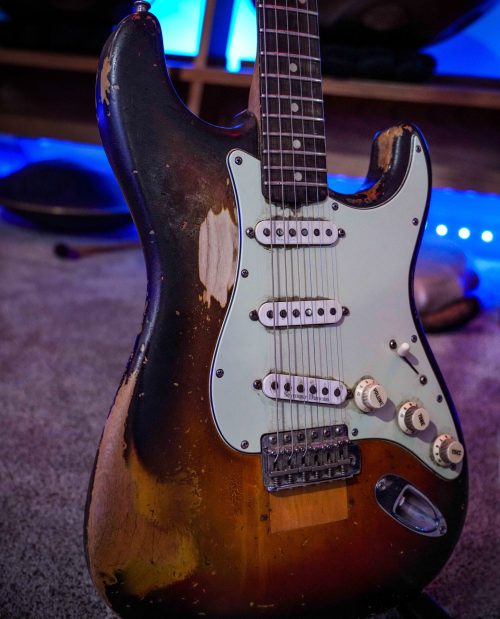
I encourage every student to experiment with both acoustic and electric guitar. They each offer a fantastic experience in sound creation, and each one will teach you something the other can’t.
Whatever instrument you start on, give it time. Show up for it. The music will follow.
Ready to Start Learning?
If you’re in the Cincinnati and nearby areas and looking for guitar lessons, I’d love to work with you. I teach students at all levels
from complete beginners to players looking to deepen their technique and musical understanding.
👉 Reach out here to schedule a lesson →
Whether you already have your guitar or you’re still deciding, we can figure it out together.
Frequently Asked Questions
What's a good acoustic guitar for a beginner?
A good acoustic guitar for a beginner is one that’s easy to play, stays in tune, and doesn’t fight your hands every time you pick it up. Based on what I’ve seen work across hundreds of students, the Yamaha FG800, Fender CD-60S, and Martin LXK2 Little Martin consistently deliver on all three.
What makes them “good” isn’t just the brand name, its low action, quality tuning machines, and solid construction at a price that makes sense before you’ve fallen in love with the instrument. Whatever you choose, budget an extra $40–$60 for a professional setup. That single step does more for playability than spending twice as much on a different guitar.
Which acoustic guitar is best either dreadnought, parlor, or concert?
It depends on your body and hands. Dreadnoughts are the most common choice for their full tone, but smaller players often do better with a concert or parlor body. I recommend the Martin LXK2 to students who find full-size guitars awkward; the narrower neck makes chord fingering noticeably easier.
What are the best acoustic guitars for beginners on a budget?
In the $150–$300 range: Yamaha FG800, Fender CD-60S, and Orangewood. At $300+, the Taylor Academy 10 and Seagull S6 Original are worth the stretch. Below $150, be cautious — a guitar that’s hard to play is the fastest way to quit early.
Is the Martin LXK2 good for beginners who struggle with full-size guitars?
Yes, it’s my personal go-to for students who find standard acoustics uncomfortable. The travel/parlor-style body and narrow neck make chord fingering noticeably easier, especially for smaller hands, though nothing accelerates progress faster than beginner guitar lessons with the right teacher.. My honest advice: hold a few different body sizes before you buy. The one that feels natural in your arms is the right one.
Is a Yamaha acoustic guitar good for beginners?
Yes, Yamaha’s entry-level acoustics, particularly the FG800, are among the most consistently well-made beginner guitars available today. The factory setup is better than most guitars in the same price range, the solid spruce top gives you a tone that improves as it opens up over time, and the build quality control is reliable. I’ve seen students learn on Yamaha guitars for years and never feel the need to upgrade. If you’re looking for a straightforward, no-regret first guitar in the $200 range, the FG800 belongs at the top of your list.
Can you play rock music on an acoustic guitar?
Absolutely. Some of the most iconic rock moments in history happened on an acoustic, think Stairway to Heaven, Blackbird, or virtually everything from MTV Unplugged. The best acoustic guitar for rock music is one with a dreadnought or jumbo body, which gives you the volume and projection to cut through. A solid spruce top adds brightness and clarity that translates well to rock strumming patterns. Getting a guitar with a built-in pickup like the Martin LX1E lets you run it through effects and amplification, which is exactly how I approach my own acoustic performances. Rock on acoustic isn’t a compromise. It’s its own sound.
