
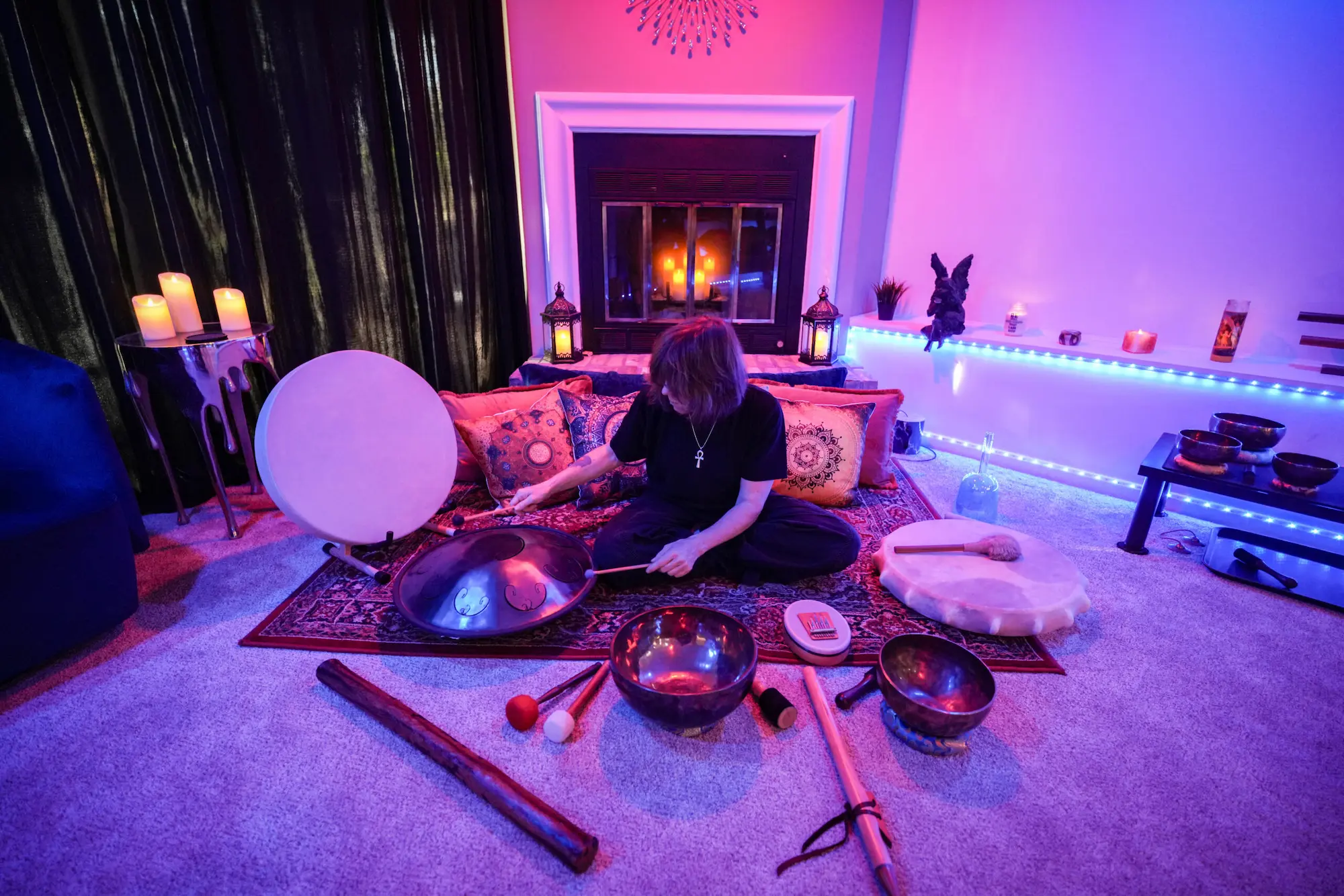
Maybe you’ve seen a sound bath on a studio schedule and wondered whether you’d be the only person in the room who didn’t know what to do. Do you need to meditate? Will someone ask you to chant? What if your mind won’t stop racing?
Here’s what to expect at a sound bath, in plain terms: you get comfortable, usually lying down or sitting, and listen while a facilitator plays instruments such as singing bowls, a gong or a handpan. Despite the name, no water is involved. In many sessions, you simply rest and listen. Check whether your chosen format includes any additional activities.
This guide walks you through a typical first session, how to prepare, what you might notice, and how to choose a session that suits you.
What Is a Sound Bath?
A sound bath is a listening experience in which you rest while live instruments fill the room with sustained tones, rhythms and textures. The “bath” refers to being surrounded by sound, not to getting wet.
Sound bathing is often described as a form of meditation, but it doesn’t ask you to master a technique. The sounds give your attention somewhere to land. When your mind wanders, as it may, you can simply notice the next tone and return to listening.
Providers use the terms “sound bath” and “sound bath meditation” in different ways. Some sessions include spoken guidance, breathing cues or a moment to set an intention; others are mostly or entirely music. Some invite participants to lie down, while others work just as well seated. There’s no single correct format, so it’s worth asking a facilitator how their sessions run.

What Happens During Your First Sound Bath?
Arriving and Getting Comfortable
If you need something adjusted, such as a blanket for warmth, support for your back or a place near the door, mention it before the session begins. Facilitators generally expect these questions from first-timers.
Any Introduction or Guidance
You won’t be asked to perform, play an instrument or share anything personal unless a session is specifically designed for that and you’ve chosen to take part.
Listening During the Session
A few things worth knowing:
- You don’t need to stay perfectly still. Shift, stretch or scratch an itch if you need to.
- You don’t need to empty your mind. Thoughts will come and go, and that’s normal.
- You can keep your eyes open or closed.
- If something feels too loud or uncomfortable, you can change position, cover your ears, or quietly step out.
The Closing and Returning to Normal Activity
There’s no need to rush. Take a moment before standing, especially if you’ve been lying down for a while.

How to Prepare for a Sound Bath
What to Wear to a Sound Bath
What to Bring to a Sound Bath
What you need depends on what the venue provides. Before you pack, check whether these are supplied:
- A yoga mat or floor pad
- A blanket
- A pillow, bolster or cushion
- An eye mask, if you’d like to block out light
A water bottle for afterward is handy either way. If a session includes journaling, ask whether materials are provided.
Practical Checks Before You Go
- Confirm the location, start time and how early to arrive.
- Check how long the session lasts so you can plan the rest of your day.
- Eat something light beforehand if you’d otherwise be hungry; a heavy meal right before lying down may feel uncomfortable.
- Silence your phone before you go in.
Share Any Needs With the Facilitator
Let the organizer know in advance if you’d prefer to sit rather than lie on the floor, need accessibility support, or are sensitive to loud or sudden sounds. They may be able to suggest where to sit, adjust the volume, or tell you which instruments to expect. If you have a health condition and aren’t sure whether a session suits you, check with your healthcare provider.

What Does a Sound Bath Feel Like?
None of these responses means you’re doing it wrong, and no dramatic sensation or emotional response is required for the session to be worthwhile.
As for sound bath benefits, many participants say they feel calmer or more rested afterward, and some find it an approachable way into meditation when sitting in silence feels difficult. Research on sound meditation is still early and studies tend to be small, so it’s best to think of a sound bath as a restful listening practice rather than a treatment. Sound baths don’t replace medical or mental health care.
What to Do After a Sound Bath
If you like, jot down a few notes about what you noticed: a sound you enjoyed, a thought that surfaced, or how your body felt. Journaling is entirely optional, but it can help you decide what kind of session you’d like to try next. Some people feel energized afterward; others feel ready for an early night. Either is fine.
Exploring Sound Baths With Kelly Richey
Her offerings include:
- Private one-to-one sessions for an individual experience.
- Small-group sessions for up to four people, a good fit if you’d like to come with a friend, partner or family member.
- Extended Sound Bath & Reflection sessions that can include optional guided writing or spiritual direction, with a journal, pen and writing prompts provided.
- On-location sound baths for yoga studios, retreats, wellness centers, private gatherings and special events throughout Greater Cincinnati and beyond.
You can compare formats on the sound bath sessions with Kelly Richey page, or read more about Kelly’s background as a musician and healing arts facilitator.
Frequently Asked Questions
How long is a sound bath?
Can you fall asleep during a sound bath?
Can I sit instead of lying down?
Do I need meditation experience?
Is it normal to feel emotional during a sound bath?
What if the sounds feel too loud or uncomfortable?
Wondering which session would suit you, or want to talk through seating or sound sensitivity first? Contact Kelly about a session, and she can help you find a comfortable place to start.
